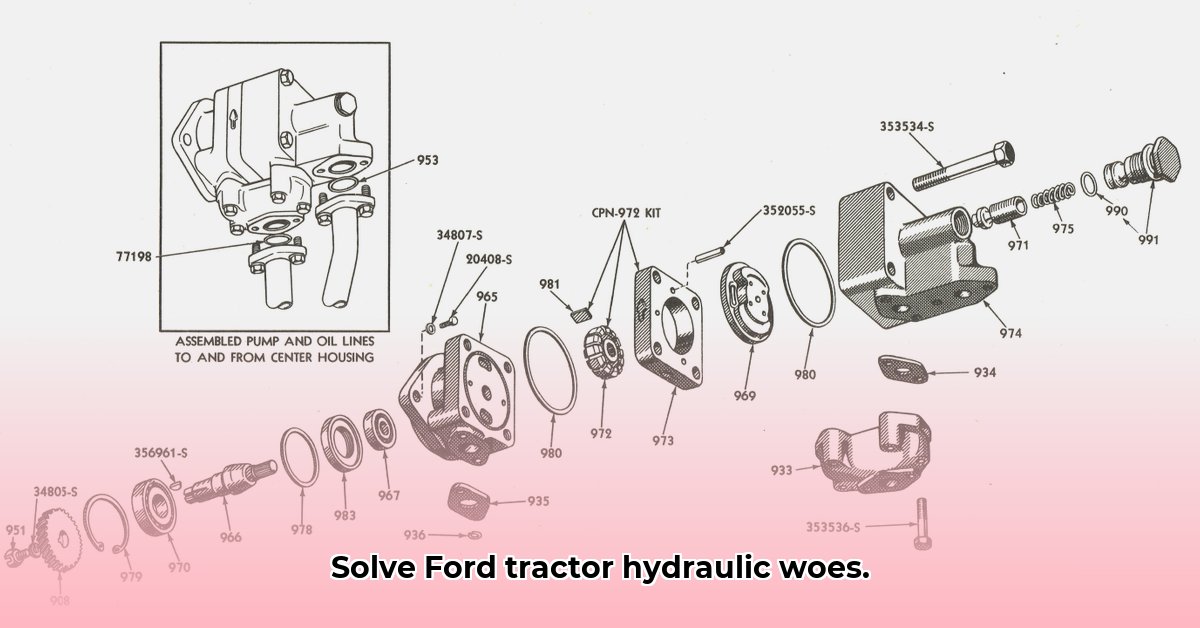
Understanding your Ford tractor's hydraulic system is key to preventing costly repairs. This guide uses diagrams to help you identify parts, troubleshoot problems, and perform basic maintenance, saving you time and money. We'll cover essential components, common issues, and preventative maintenance strategies. Think of this as your personal guide to hydraulic mastery. For further electrical diagrams, see this helpful wiring diagram resource.
Understanding Your Ford Tractor's Hydraulic System
Tractor hydraulic systems might seem complex, but they're essentially sophisticated fluid-power systems. Mastering your hydraulic parts diagram is crucial for effective troubleshooting and maintenance. It's your roadmap to a healthier, longer-lasting hydraulic system. Have you ever experienced a sudden hydraulic failure in the field? It's a costly and time-consuming problem.
Decoding Your Hydraulic Parts Diagram: A Step-by-Step Approach
Your hydraulic parts diagram is more than just a picture; it's a detailed map of your tractor's hydraulics. It shows you how every component connects and functions. Knowing how to read this diagram is your first step to becoming a hydraulics expert.
Locating Your Diagram: Begin by finding the diagram specific to your Ford tractor model. This is usually located within your owner's manual. If not, check your local Ford dealership or a reputable online parts supplier.
Identifying Key Components: Hydraulic diagrams use symbols to represent various parts. Familiarize yourself with these symbols, which will enable you to know what each part is, and what to do if that part fails.
- Hydraulic Pump: (The power source of the hydraulic system) This is the heart of your system, generating the pressure needed for operation.
- Valves: (Control the flow and direction of hydraulic fluid) These direct the flow of hydraulic fluid, controlling various functions like lift and steering.
- Cylinders: (Transform hydraulic pressure into mechanical motion) These are the "muscles," producing the work—lifting, moving, and controlling implements.
- Reservoir: (Stores the hydraulic fluid) This is the storage tank for the hydraulic fluid.
- Hoses and Lines: (Carry the hydraulic fluid between components) These are the arteries of the system. Always regularly inspect these components for leaks, bulges, and wear and tear, to ensure the fluid keeps flowing.
Tracing Fluid Flow: The lines on the diagram represent the pathways of the hydraulic fluid. Follow the fluid's journey from the pump, through the valves and cylinders, and back to the reservoir. Understanding this flow is vital for diagnosing problems.
Part Identification: Each component on the diagram is usually labeled with a part number. This makes ordering replacement parts significantly easier. Need a new valve? The diagram tells you precisely what to order, removing any guesswork.
Troubleshooting: Notice a leak or sluggish performance? Your diagram pinpoints the possible problem area. Is it a loose connection, a damaged hose, or internal pump failure?
Common Hydraulic Problems and Solutions
Several common issues can plague hydraulic systems. Your diagram helps pinpoint the source of the malfunction and aids in the repair process.
Leaks: Slow drips often signify a loose hose clamp or worn-out seal. More significant leaks might indicate a catastrophic failure of a component. Always check fluid levels regularly. Low fluid levels can cause severe damage.
Sluggish Performance: If your equipment moves slowly or fails to reach full lift, a clogged filter, low fluid levels, or a failing pump may be responsible.
Complete System Failure: If the system is completely unresponsive, check fluid levels, filters, and electrical connections. Your diagram helps you isolate the problem zone.
Preventative Maintenance: A Proactive Approach
Keeping your hydraulic system healthy significantly reduces the chance of costly repairs.
Regular Fluid Changes: Follow the manufacturer’s recommendations for fluid changes. Using the wrong type of fluid can damage seals and shorten the life of your components. Always use high-quality hydraulic fluid.
Filter Maintenance: Clean or replace filters as scheduled. A clogged filter can seriously harm your hydraulic system. A dirty filter is a warning sign. Regular maintenance prevents this damage.
Hose and Connection Inspections: Regularly inspect hoses and fittings for cracks, bulges, or leaks. Replace worn parts immediately.
Pressure Checks: Periodically check the hydraulic system’s pressure using a gauge to monitor overall health. Consistent low pressure indicates a potential underlying issue.
Extra Tips and Considerations
Safety First: Always disconnect the power source before working on any hydraulic components. Wear protective eyewear and gloves.
When to Call a Professional: If you're unsure about any repair, consult a qualified mechanic. Some repairs require specialized knowledge and equipment.
Storage: Proper storage of your tractor during periods of non-use can greatly extend the lifespan of the hydraulic system.
"Regular preventative maintenance is the most cost-effective way to ensure the longevity of your Ford tractor's hydraulic system," says Dr. Emily Carter, Agricultural Engineering Professor at Purdue University. "Ignoring this can lead to major expenses down the line." Preventative maintenance is cheaper than repairs.
By using your Ford tractor's hydraulic parts diagram and following these guidelines, you'll be well-equipped to maintain your hydraulic system, saving money and ensuring your tractor stays operational for years to come. Remember, understanding your system and performing routine checks are crucial for its long-term health. Have you considered investing in a pressure gauge for regular monitoring? This simple tool can provide early warnings of potential problems.